PARTI <3 CLUB KIDS
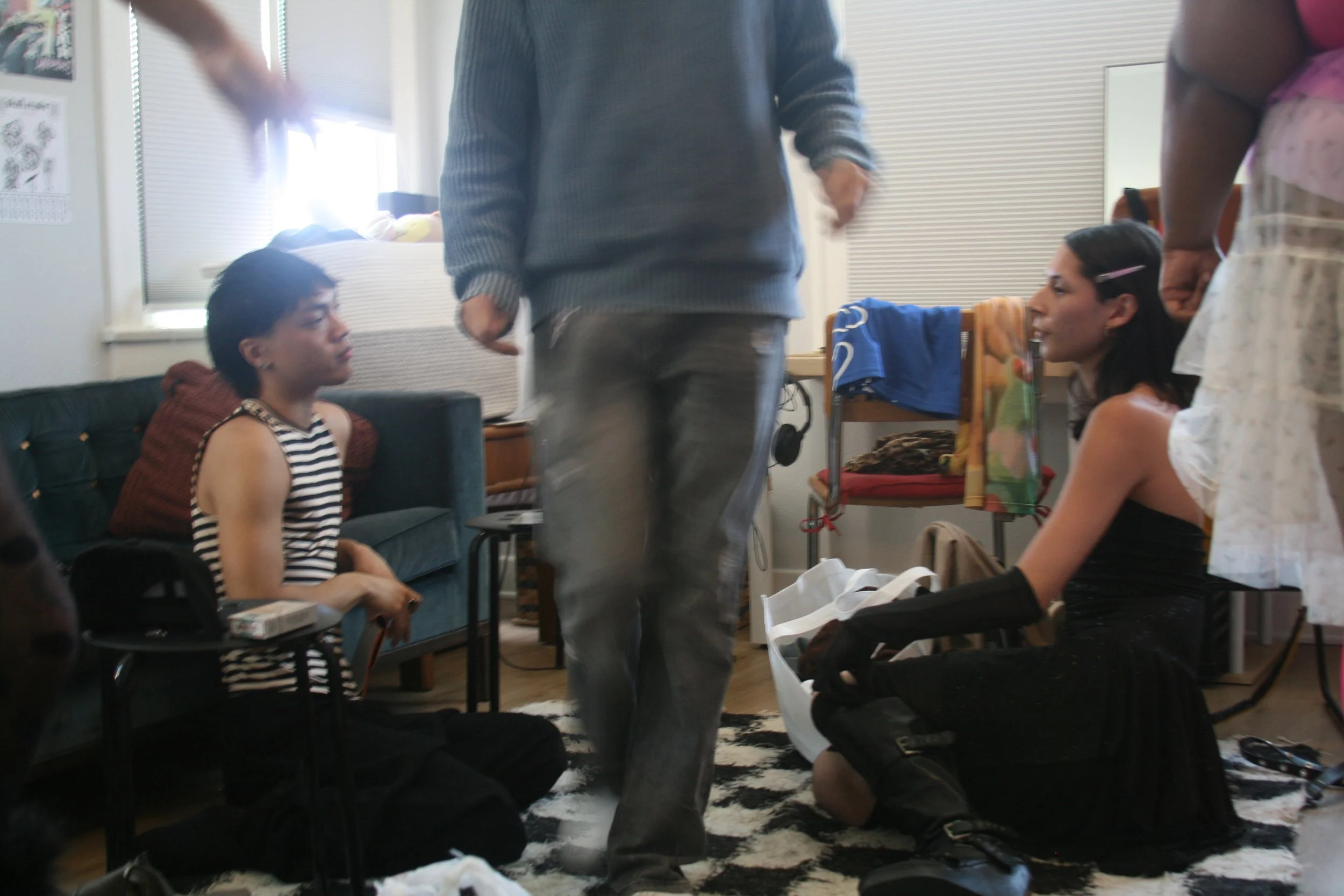
In an upstairs apartment in Los Angeles, four individuals find themselves stripping their clothes off, leaving what they came in on the grey wood paneled floors.
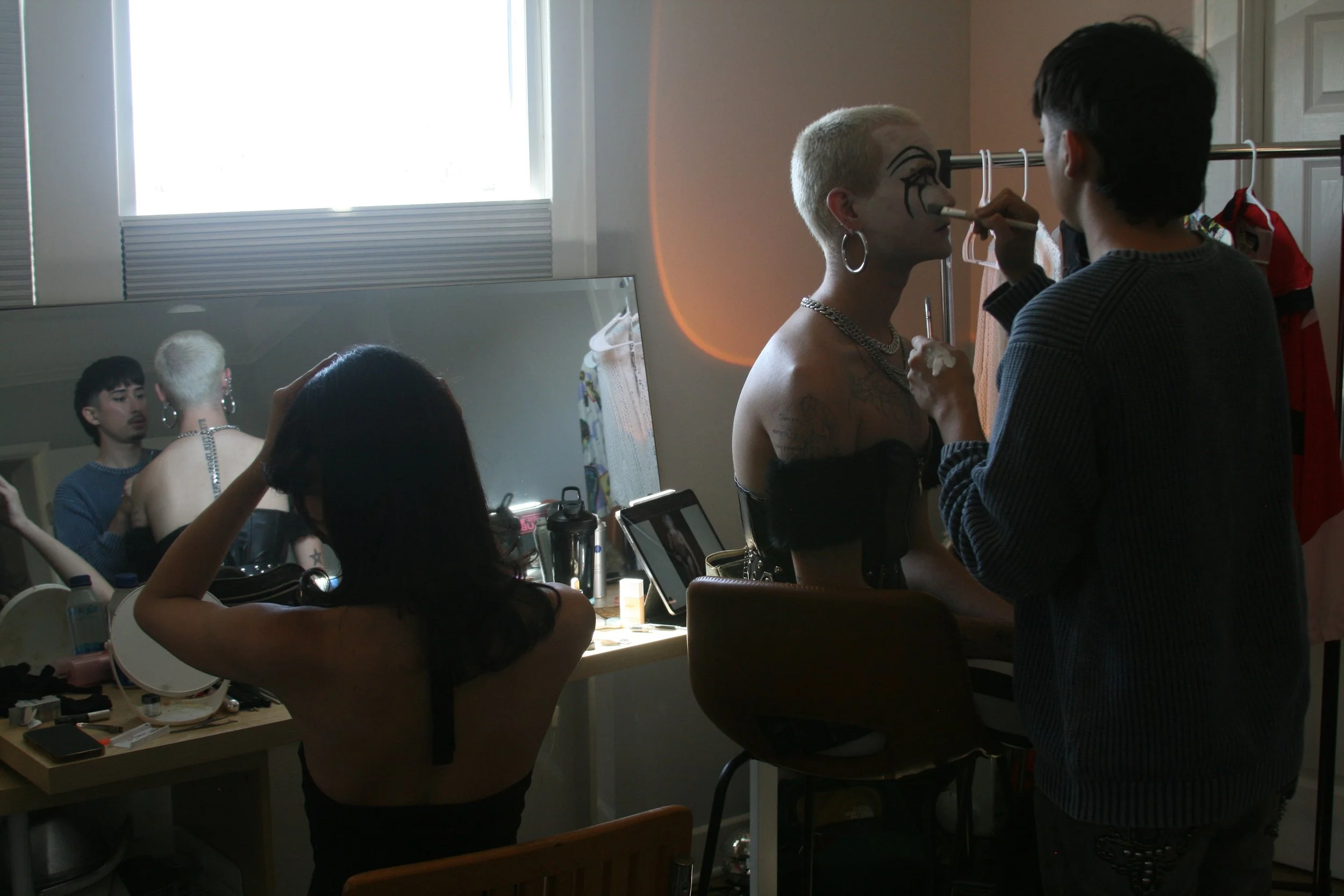
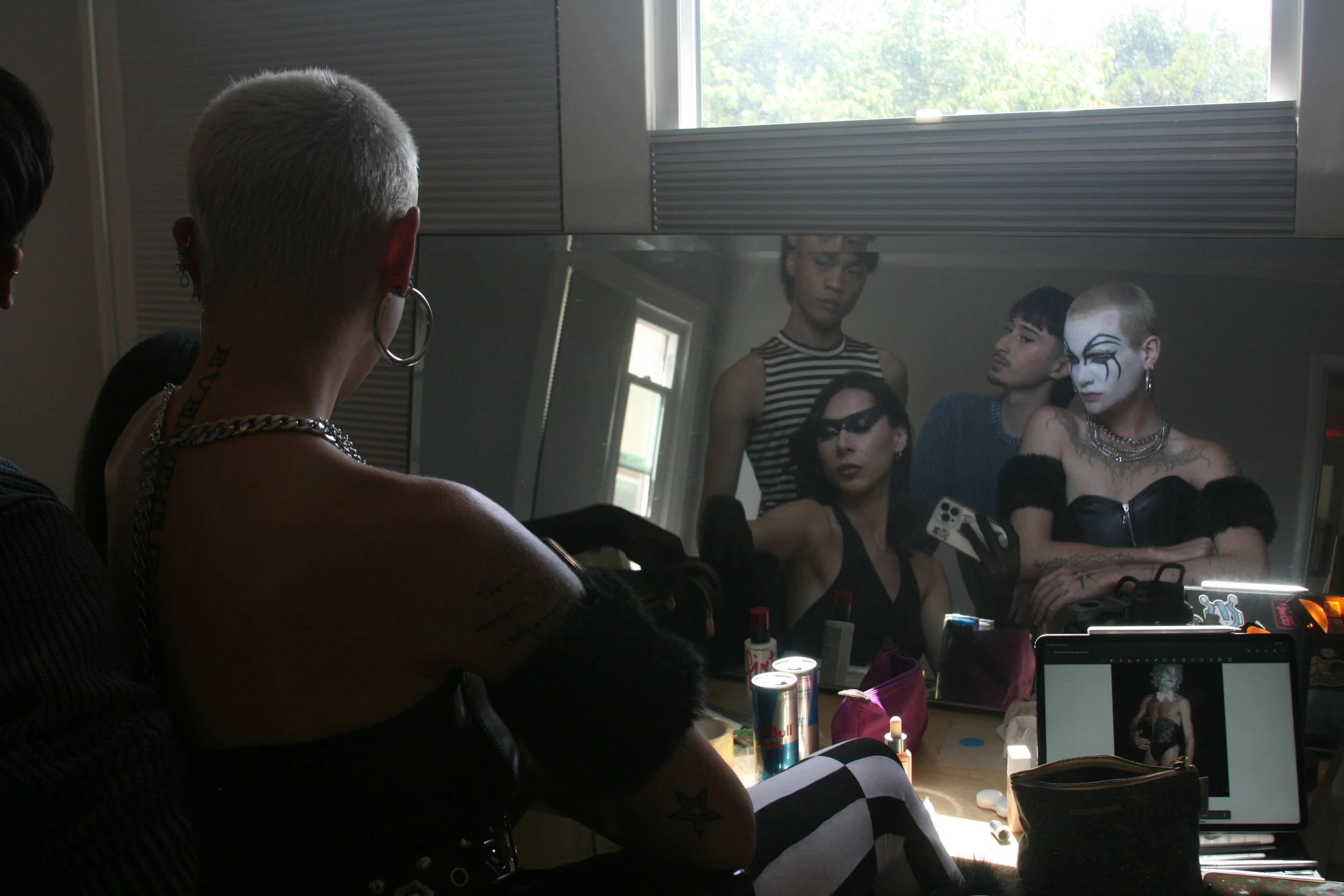
A pair of camouflage cargo shorts, a black satin slip dress, and a pair of jogger sweatpants, lay scattered on the floor. The room is warm and the sun hasn’t even hit peak yet. Music is being released out of a box speaker, drowning out the sounds of leather, buckles, belts, and fabrics loosening. A few of them are sprawled on top of a fur rug placed on the floor. Others are leaned against a vanity watching themselves transform in the mirror. One by one, they finish stripping out what they came in as and slip into someone else, another version of themselves that exists within them. The version of themselves that exists on weekend nights in Los Angeles.
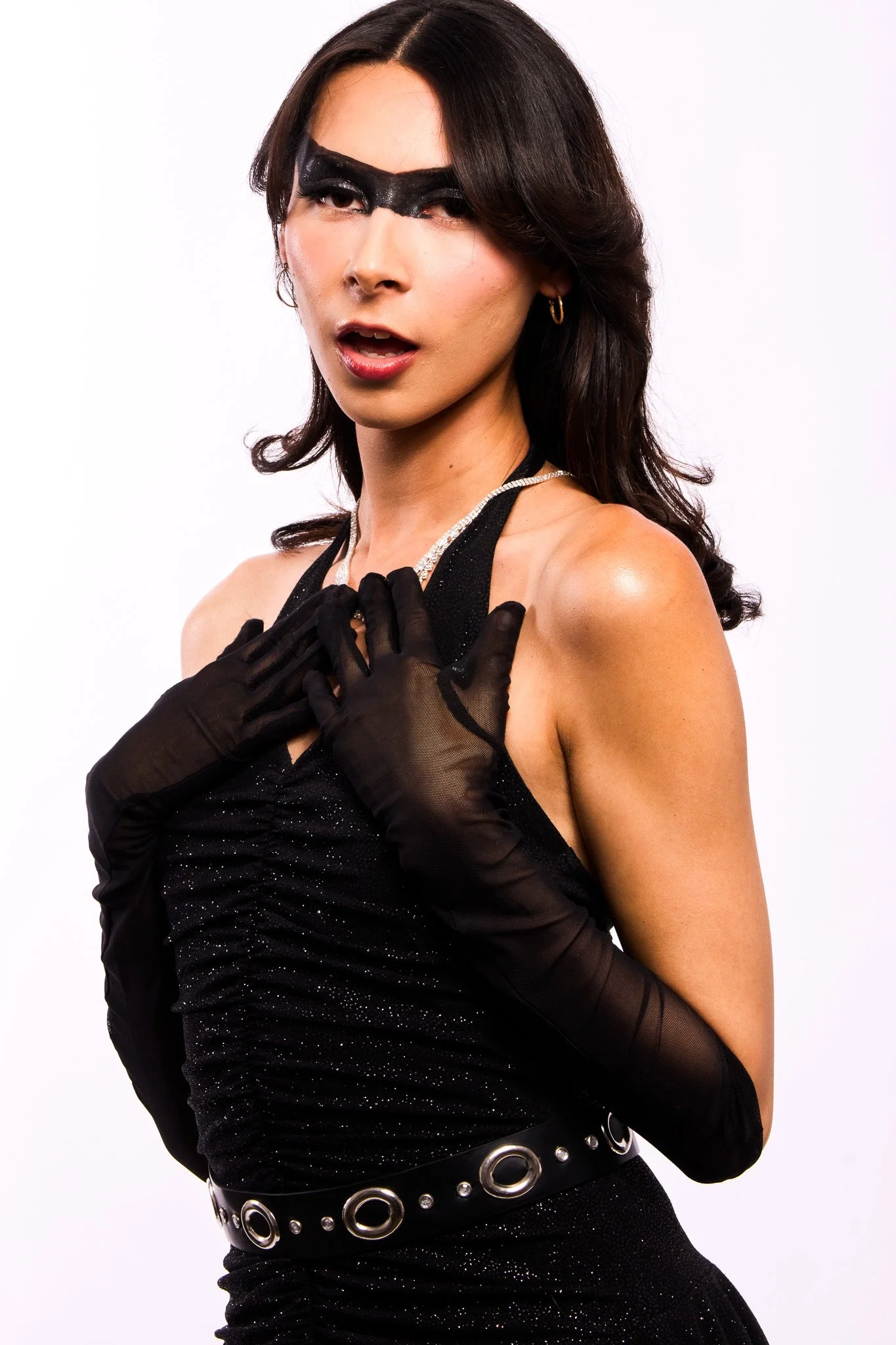
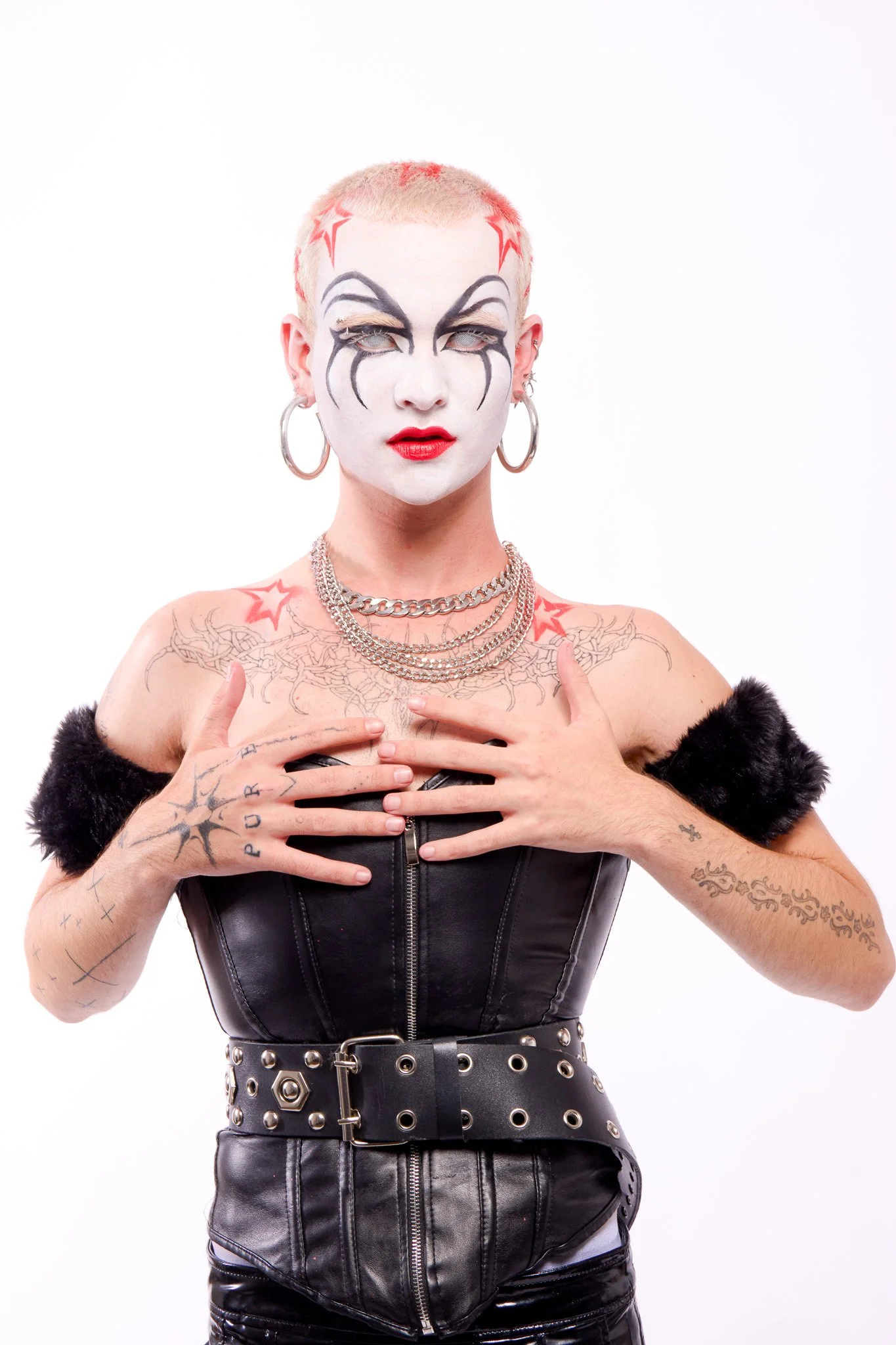
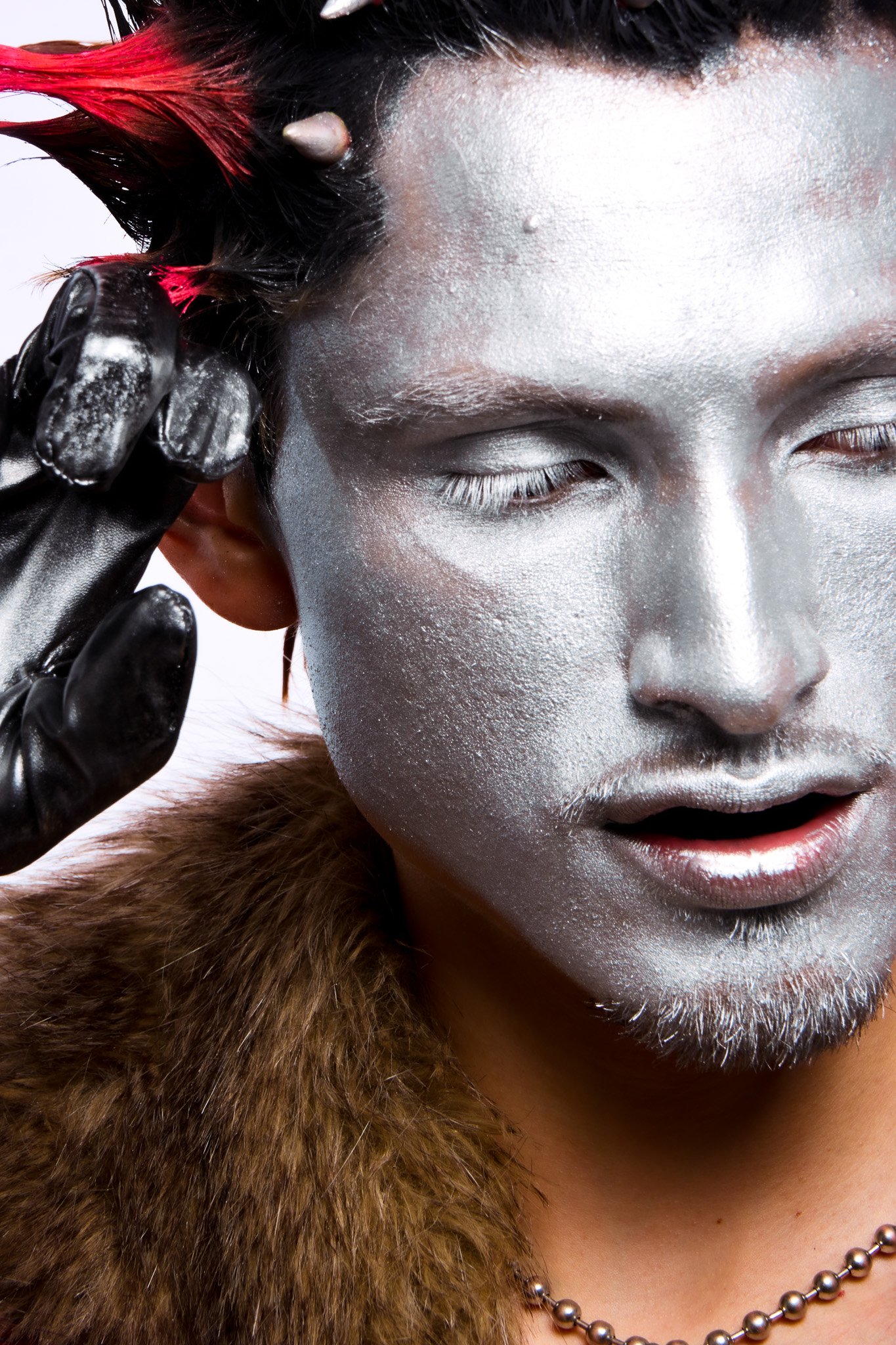
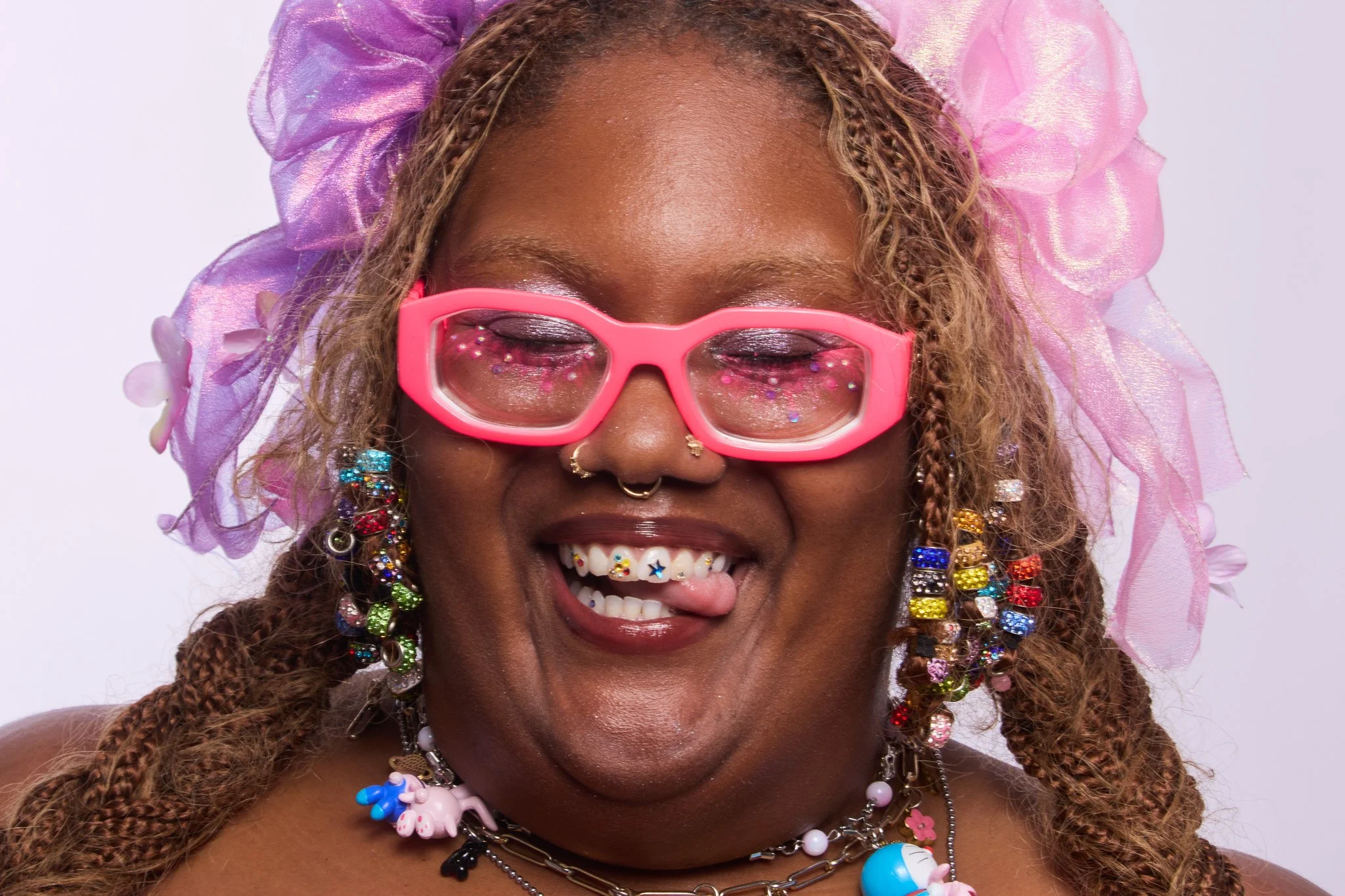
HOT, YOUNG, AND SEXY are three words, Kodi, one of the models, uses to describe her experience in the queer nightlife scene in LA.
Four models from four different origins find themselves at home in Los Angeles. On a weekend night, you can find any one of them strutting down the street, breaking a sweat on the dance floor, or knee deep in a dark room. Maybe even on a weeknight. Which is what happened to many of them as everyone trickled in after their 12PM call time.
“I wanted to pull different parts of the queer LA community together. I haven’t talked to anyone in this room for more than 15 minutes in my life, but I knew everyone could understand what it’s like; the queer human experience.” - Rob
I’m asked, “You don’t mind if I take this off right here? Let me know if you guys have a problem with titties,” as I go around talking with the models trying to get a feel for who they are. Many of these models are meeting for the first time in this room. They exchange Instagram handles as they go through their extraneous list of mutual friends. The probability that they have all been at the same place, same time before is high, yet they’d never know.
AC: We’re all living this universal queer experience, but it’s daunting how there isn’t only one way to live it. At the same time, it’s almost comforting. We live in the same areas, we share the same spaces, we go to the same parties, yet we live such nuanced specific lives.
Marc: It’s like siblings. You could live in the same household, eat the same food, exist right next to each other, but you’re developing and experiencing life so differently from one another.
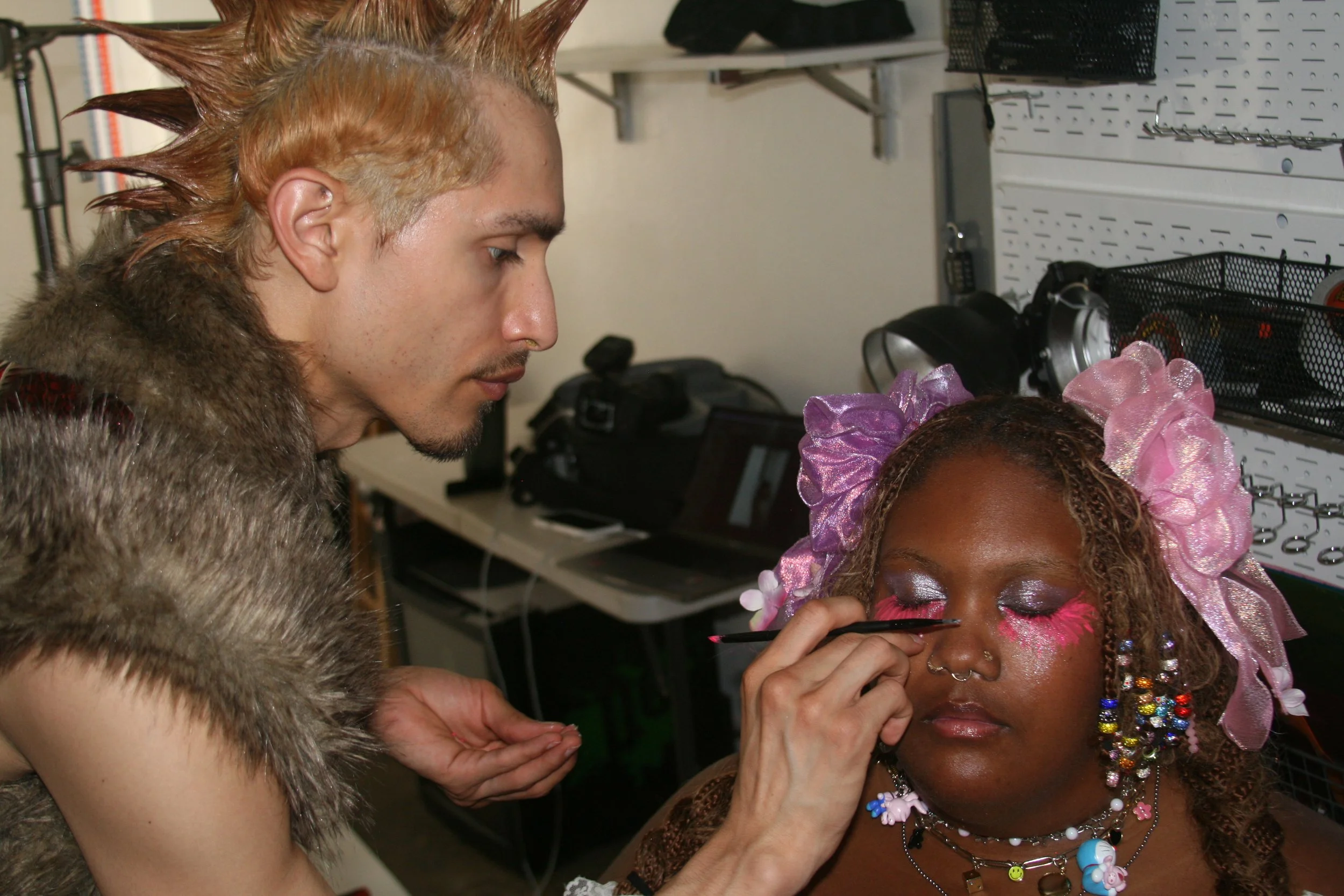
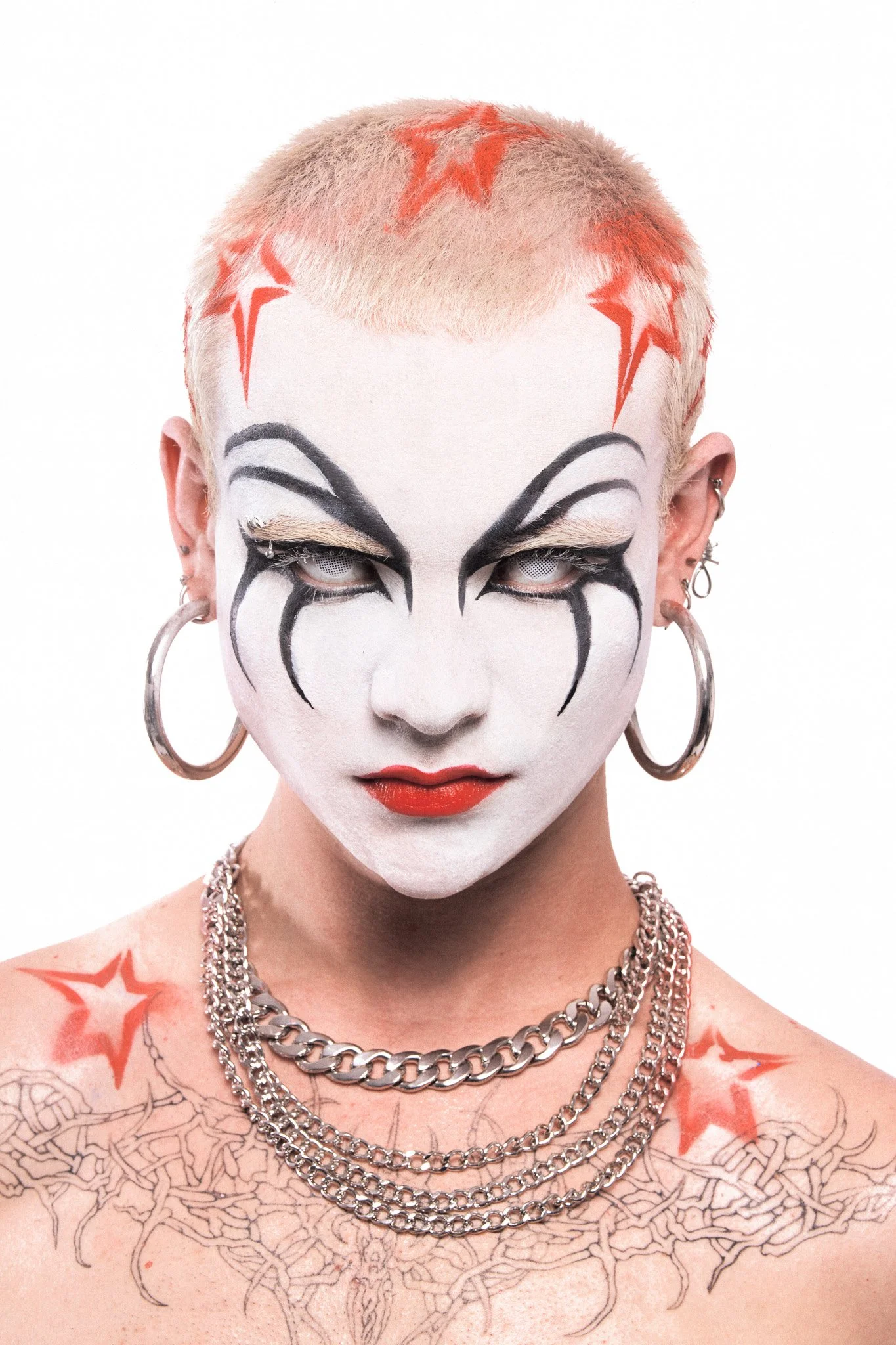
As I am talking to Marc, model and makeup artist for this photoshoot, I notice how his liberty spikes almost touches the doorway. He’s fixing himself up while simultaneously helping the other models with their makeup.
AC: Whenever I see you, I’m constantly reminded me of drag and the NYC ballroom scene. Do you find yourself drawing inspiration from queer places like those or where does the creativity come from?
Marc: Those were actually my original inspirations for this look as well as for the other models. Those two spaces specifically, remind me that if you have the materials, you can literally conjure anything up. If you have some makeup and some fabric, you can literally be whoever you want to be or transform who you want to transform into.
I’m watching him meticulously place small rhinestones on another model’s face with his fingers. Without a physical plan nor strategy, he feels out where the rhinestones should go.
AC: Was makeup one of the first doors to queerness that opened for you?
Marc: I would say so. 2020 was when I started to take makeup seriously and I’ve been doing it since.
AC: I feel as though makeup to you is what fashion to me. Fashion was one of the first gateways into queerness for me. I just always remembered feeling like “This feels natural, this feels right.” Did makeup feel the same for you?
Marc: I started dabbling in SFX when I was only 13. My mom used to do haunted houses, so I would find myself helping her. I never thought to pursue it because I never saw the possibility that could come from it. That’s when drag was introduced to me, then I realized that’s it, right there. I have the skills to be able to do what they’re doing.
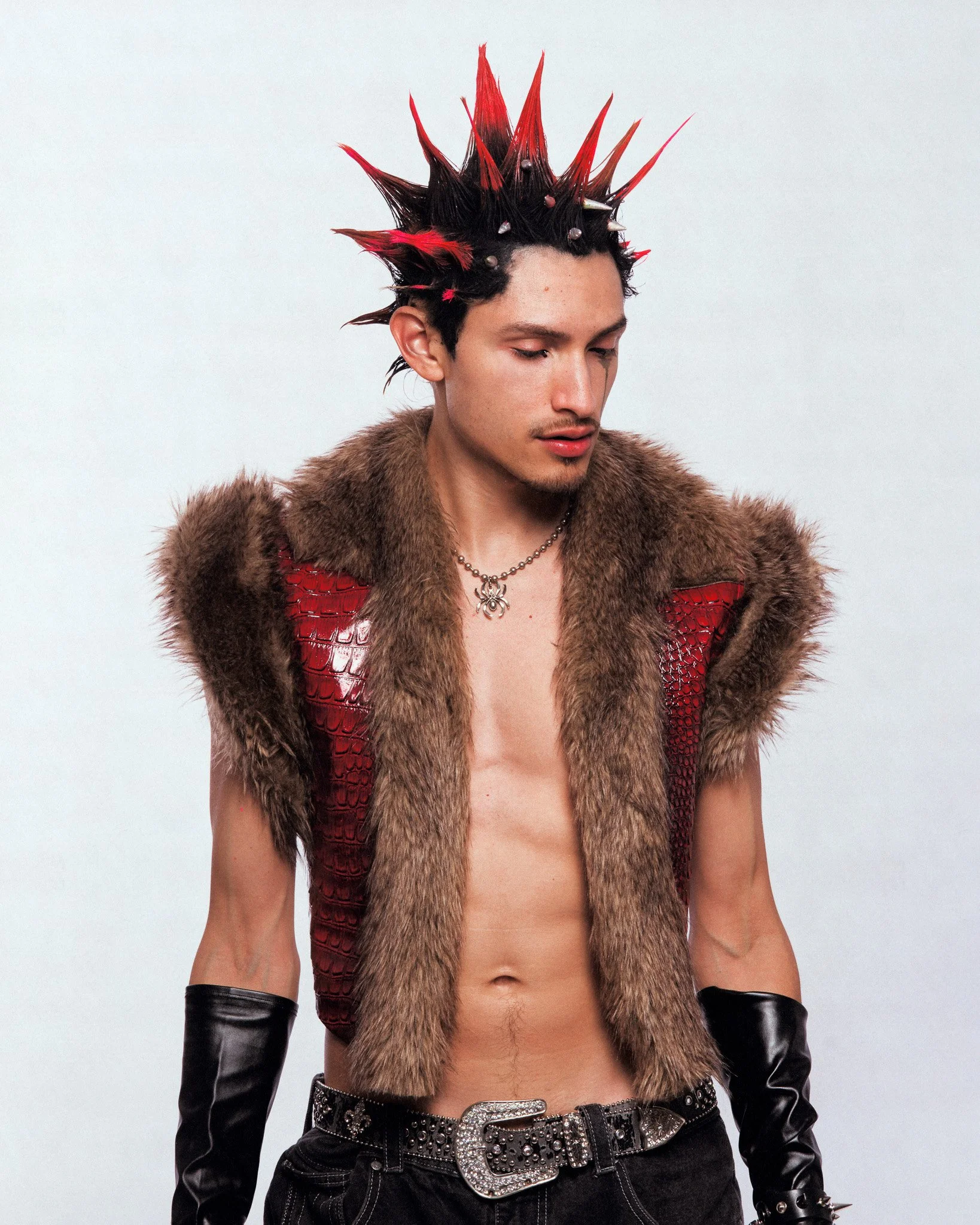
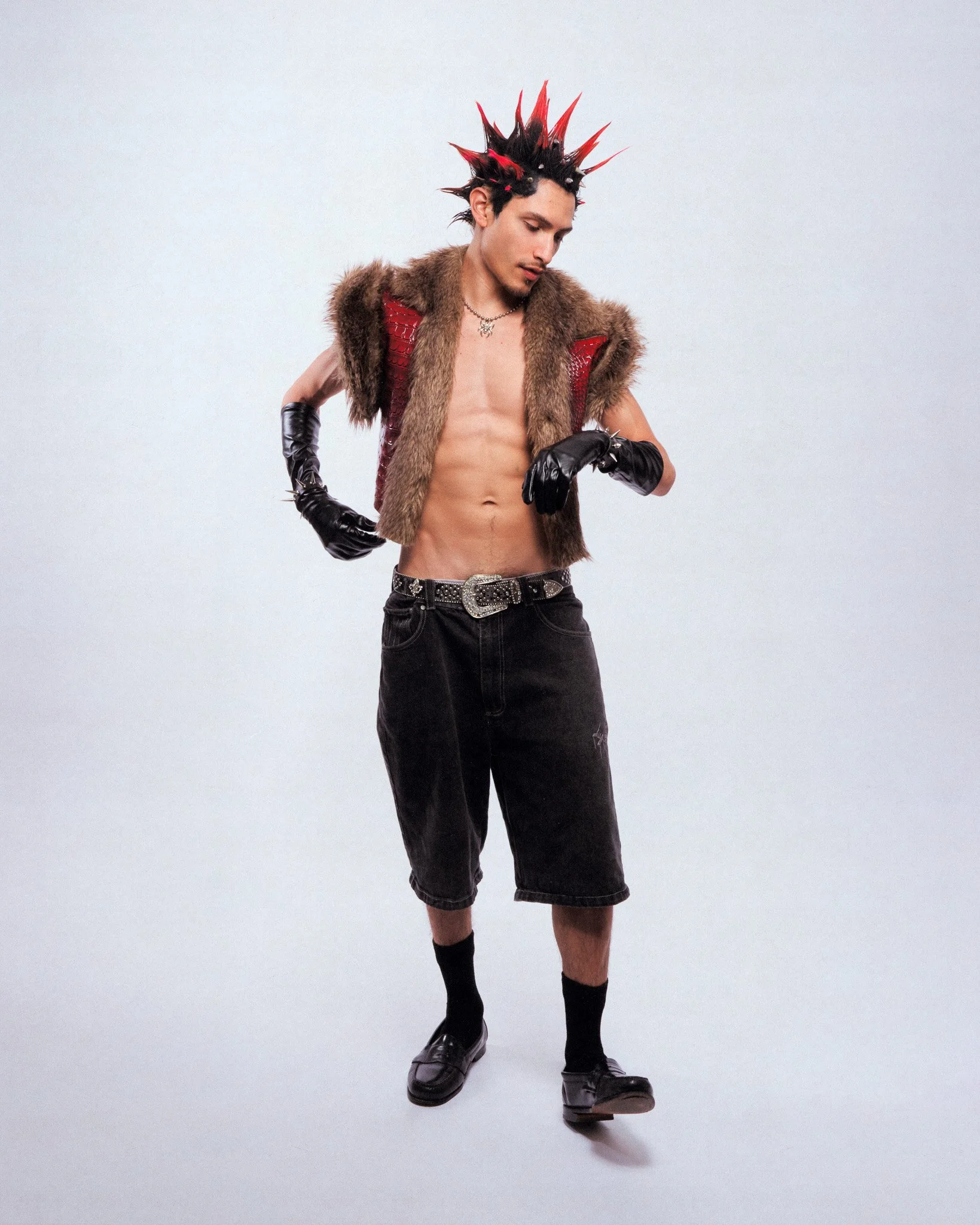
Blake, one of the models, is laying out an array of wardrobe options all against the wood grained floors. From leather to fishnets, camo shorts to mini skirts, kitten heels to 6 inch platform boots.
AC: What was the gayest night of your life?
Blake: There’s been a lot of those. There was this one night. It was midnight in DTLA. I was there with a guy that I was talking to for about a week.
AC: Sounds about right.
Blake: We went down an alleyway and slipped into a small entrance. We walk into this big warehouse. There’s a makeshift bar with paper cups, foldable chairs, and a row of porta potties. You know how it goes. Not much, but those are the best. Everyone’s dancing around the DJ. Before you know it, the guys next to you are going down on each other. Rows of people leaned up against the wall. All while everyone’s dancing.
I have found myself in LA almost every weekend for the past three years. There’s this gravitational pull that happens. I know what can happen on these nights. I’ve seen it, I’ve felt it, I’m living it. Something about it keeps drawing me back. There’s a level of familiarity we find ourselves basking in; the people we find ourselves around, the cold concrete walls, the heavy music thumping against our eardrums. It never felt unfamiliar. We all come from all around to one place for one thing, fun. We let ourselves get grazed by each other's' arms. We dismiss our feet getting stepped on repeatedly. We no longer care about how long our makeup or our hair took us to do as we let it get ruined by a stranger.
We also talk about his humble beginnings coming from Oklahoma and his experience living in Los Angeles. Vastly different atmospheres, you could imagine. When talking about the differences of the two, he speaks on the current queer state in Oklahoma.
Blake: There’s a huge deal back in Oklahoma right now because they’re taking books out of libraries that mention the word ‘gay’. But then, they talk about banning drag queens because 'they are targeting children’. All they’ll see is like something you’d see on Dragula, like something really crazy, sexy, outlandish, anything like that. They think those are the drag queens that have shows that kids can attend. They don’t do that. If their shows are for all ages, their humor and their performance is all ages too. They think every drag queen is in pasties only, or making inappropriate jokes. But there’s a ton of drag queens that do [family friendly] performances. It’s weird, in Oklahoma they don’t see that. It’s all demonized.
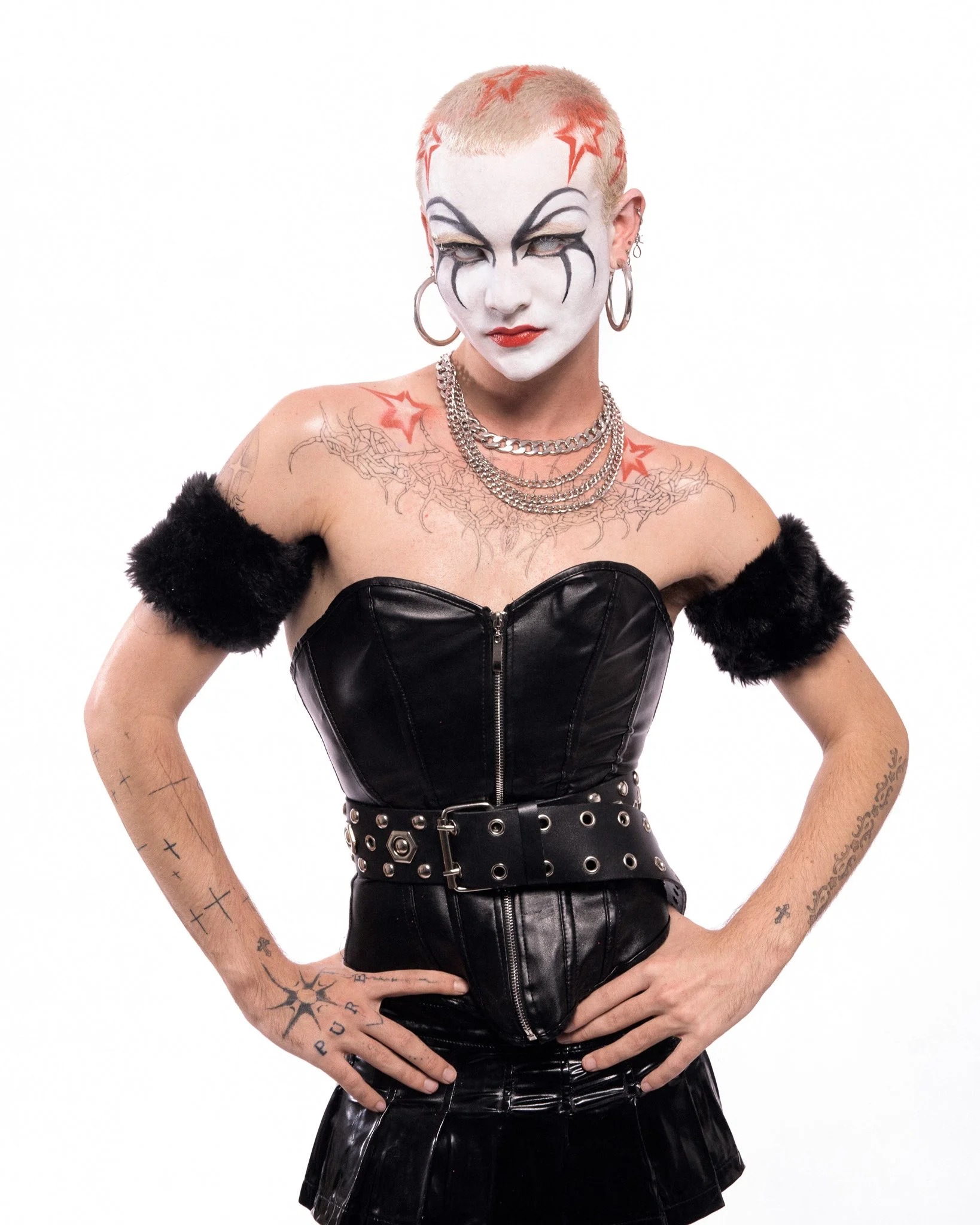
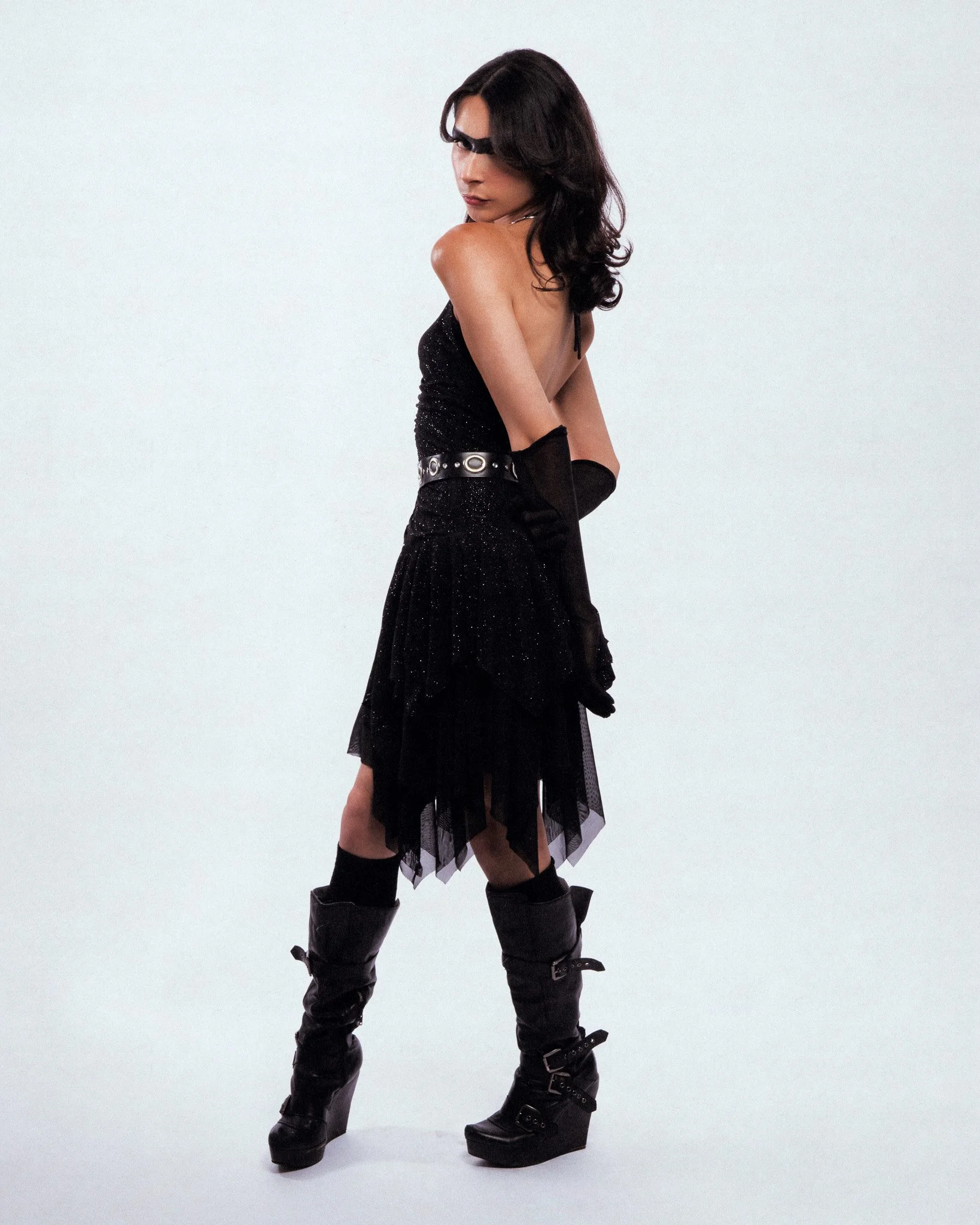
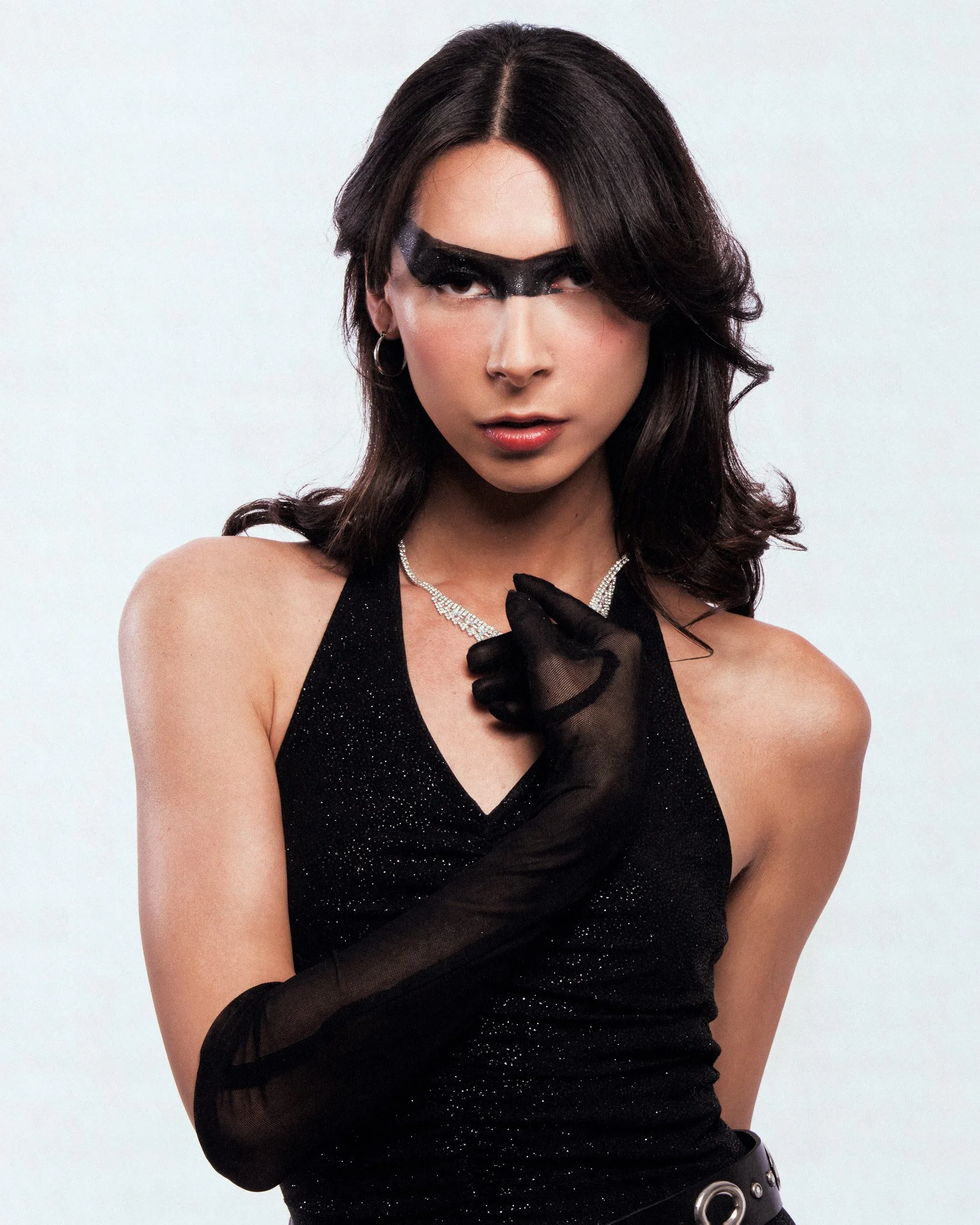
Vanessa: There’s always this notion, especially for trans women. Where it’s like, “Trans women are predators” or “they just wanna have sex” when literally, I’m giving borderline asexual. I feel like those notions come to play in my own head when I go out. I will get the weirdest stares from families when I’m at the supermarket. I feel like I have to defend myself– or, not defend myself, but I feel this shame put on me for something that I’ve never done.
I’m talking to Vanessa, model, as she’s waving a hot curling iron throughout her hair. She’s carefully holding the iron making sure not to burn herself.
AC: When do you feel most in your body?
Vanessa: The first thing in the morning. There’s a mirror near my bed. You would think I would feel most in my body when I’m dressed up and have all my makeup on, but it’s when I see myself for the first time in the morning. I feel like I have to do that every morning. I love myself and it took a long way to get to this point. Sometimes, I feel like I have to wear makeup, just so I could be respected or understood.
AC: How do you deal with being constantly perceived, especially in queer communities, as well as on the internet? Growing up, I feel like there was always this pressure to conform to societal norms. Then, you come to grow out of it, but find yourself still trying to conform yourself into these places that are supposed to be our safe spaces.
Vanessa: I feel like you just have to give yourself grace because if it’s not one rabbit hole, then it’s another.
AC: You talked a bit about how it feels going to the supermarket, unapologetically, on a regular day. Now I’m wondering how it feels for you to go out on a weekend night in LA., I’m guessing also unapologetically. What was the gayest night you’ve had in LA?
Vanessa: One time, my friend and I went to a bar. We were sitting with these older queer people. We didn’t think much of it. Come to find out, one of them was a famous drag queen. We sat there for hours talking about their lives. They showed us photos of them throughout the years with celebrities. My fellow doll and I were there with them until the morning. After that night, I was like I could do this everyday. I feel like I only ever saw young queer people in my line of sight, so that was one of the first moments where I was given wisdom from older queer people.
As queer people, we yearn to be seen everywhere we go. Not just physically, but in every sense. Queer nightlife is one of the places where we may find that. There, we can find a roomful of people who understand us without having to utter a word. Our lives as queer people have so much to do with figuring out our identities. It’s a lifelong journey that will never end as we continue to grow and transform into the most authentic versions of ourselves.
AC: Do you think factors of your identity ever come to play when you go out?
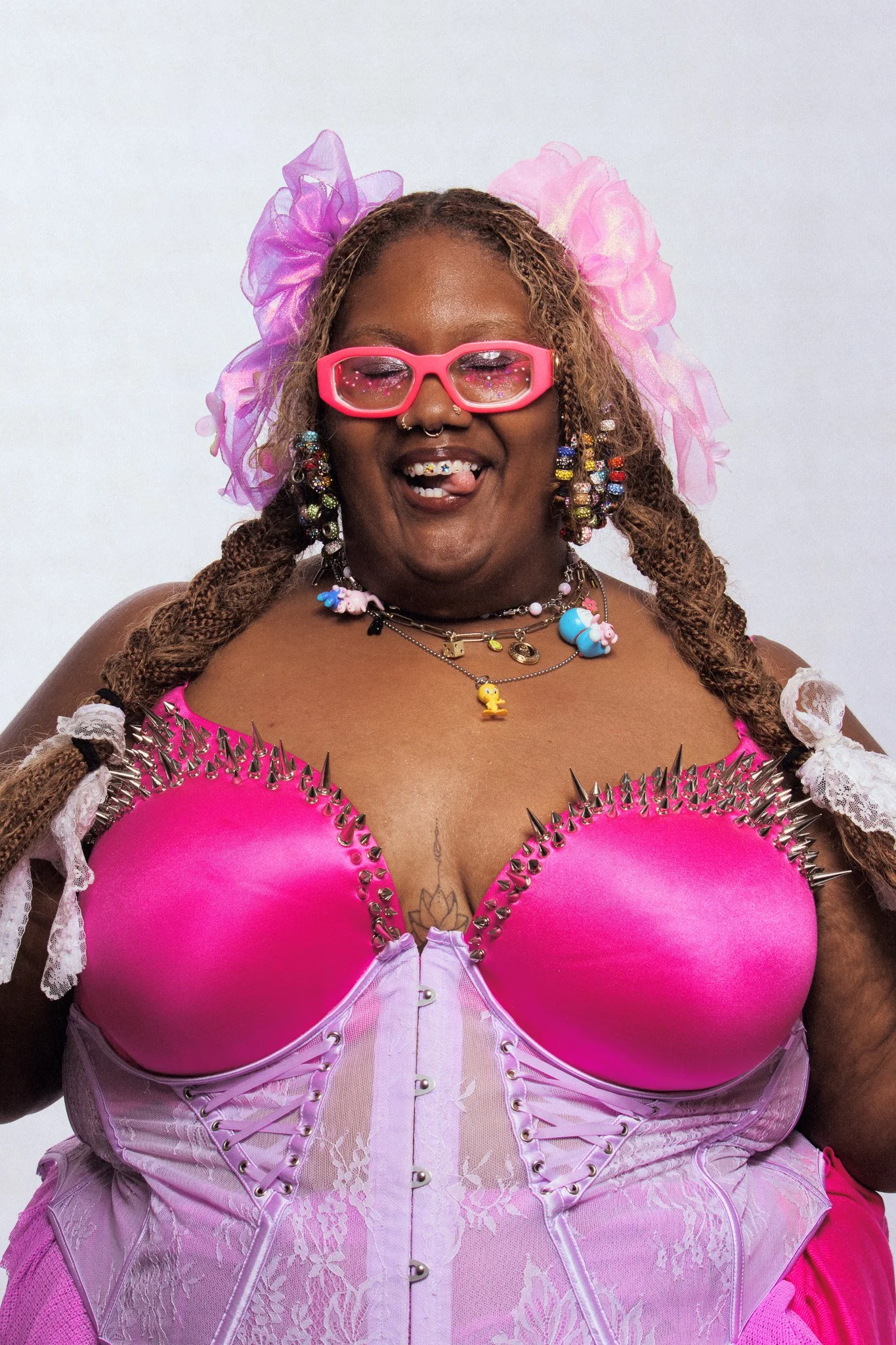
Kodi: Always. It has to be for me. I try to be the loudest, the brightest because I’m always the biggest in the room. The personality has to match it too.
I’m helping Kodi find the right position for the draping of one of the cloths on her outfit. We’re helping each other trying to test out different placements for it.
AC: Do you ever feel like the intersections of your identity ever differ the way you live the queer LA experience?
Kodi: I want to say yes. I think, yeah. Well, hell yeah. Me being who I am, the factors of my identity, and the labels I’ve given myself, I have a whole different view point in general. Solely, me not originally being from here, I also see things differently. That’s why I like to go back home every so often to ground myself, because you can lose yourself here so easily here.
AC: Do you feel like the current queer community is less community driven than it was before?
Kodi: I feel like some of our culture and some members of our community have forgotten our history, but you always have to go back to your roots. Think about why we are here and why we are able to live the lives that we live.
AC: So much of queer history has been erased. There are so many portions of empty pages in our history. As much as it is due to external forces, it also is caused from within. How do we continue to build ourselves as a community to make sure our history gets told accurately?
Kodi: I’m big on community. I feel like there’s so many rad people in the area that do dope shit. Where it’s like if we put all of our heads together, we could do so much. We are bigger than we think we are. Why I host these queer events is because these are your neighbors. I love to party, I love the club, but can we meet at a coffee shop? In these places, I meet so much people in the community, but let’s meet somewhere else where we’re not screaming over each other. Let’s hang out after this, let’s talk about art, let’s talk about the things you are invested in, let’s talk about one another.

“I think it's important to remember where you’re from, but also try to understand where other people are from. You’re never going to understand it fully, you’re not meant to because it’s not your experience, but learn to leave space open for the possibility to experience lives beyond your own.” - Marc
This is a snapshot in real time of what it could look like being queer in Los Angeles at this very moment. What is being shown and said are not the only ways to live it, there is no right or wrong way to live it. There is not a single way it looks like. We are here to show you what it can look like, what it does look like, and to never let yourself get too comfortable with the idea of what it looks like to be queer. We, as a community and culture, are always transforming. As queer people living in this digital age, we are responsible to capture what being queer feels like as we are living it for the generations to come, in honor for the generations before us, and for ourselves. With the state of uncertainty that we have learned to live in, especially in this country, there’s one thing that will always be certain: Los Angeles has been queer, is queer, and will always be queer.